Tyler Malone
Software Engineer specializing in full-stack development.
- Role
- Software Engineer · Full-Stack · DevOps · AI / Agent Systems
About
I am a full-stack software engineer. Most recently, I built WarTable.ai. I primarily work with Next.js, Nest.js, Prisma, and PostgreSQL, and I can handle projects from development through deployment. I have an appreciation for both chaotic and orderly working environments.
I served four years in the US Marine Corps as a refrigeration technician and later managed maintenance for a fleet of field-expedient utilities equipment, including generators, electrical distribution gear, ECUs, water-purification gear, and much more. I then studied computer science at Colorado State University, where I worked as a teaching assistant, conducted research, did a little game development, and spent a year on a robotics project.
Experience
-
WarTable by Freestyle Consulting
Software Engineer (Full-Stack & DevOps), Contract
WarTable is an AI platform for small businesses. I took it from an empty repo to a live, monetized product with paying users, owning every layer myself.
- Agent Athena Chat agent that takes actions across ~3,000 connected apps, with fine-grained tool control. The core of the product and its main draw for users.
- Knowledge Retrieval + memory ChromaDB retrieval over each user's synced docs, with memory across conversations. Answers grounded in the user's own data.
- Automation Health Index Multi-agent system that scores a business and generates prioritized tasks. Turns scattered business data into a list of what to fix.
- Infrastructure Billing + infra Credits and billing, multiple GCP environments, and CI/CD to Cloud Run. Ran in production and took payments.
- Next.js
- Nest.js
- Prisma + PostgreSQL
- GCP
- Firebase
- OpenRouter
- Pipedream
- Vapi
- ChromaDB
- mem0
- Stripe
-
HYVV
Software Engineer (Full-Stack & DevOps), Contract
HYVV is a business platform. I built its first AI features, then took over the entire development pipeline when the rest of the team left.
- AI Work agent Conversational agent that gathered context about users' businesses. The platform's first AI feature.
- Generation Product generator Generated whole products and features, images included, from a single prompt. Users could draft offerings without building them by hand.
- Ownership Sole engineer (temporarily) When the team scaled down, I ran GCP, CI/CD, and the database alone. Learned how to operate GCP and kept the platform shipping.
- OpenAI API
- Structured Output
- Next.js
- Node.js
- Express
- Prisma + PostgreSQL
- GCP
- Stripe
- GitHub Actions
- CI/CD
-
Project Sustain, Colorado State University
Software Engineer & Research Assistant
Project Sustain is a research group in CSU's computer science department. I built data tooling and AI features across its platforms and earned the REI Undergraduate Research Stipend.
- Analytics Stats suite Python endpoints powering RamDesk graphs of grades, submissions, and timing. Enabled faculty and researchers to study patterns in student behavior and performance.
- Integrity Citation checker Checks a paper's references against the open web, flagging one only when nothing checks out. Ran in Docker across worker machines. Cut manual bibliography review for hundreds of student papers while keeping false alarms low.
- Canvas LMS Grading tools Grading and inspection features, admin views, and faster replacements for the slow Canvas UI. Less faculty time lost fighting the Canvas interface.
- Robotics HoneyComb Contributed to a UAV swarm system for agricultural intelligence. Hands-on work with multi-drone coordination.
- Python
- Flask
- React
- MongoDB
- OpenAI API
- Structured Output
- Selenium
- Docker
- Canvas API
- Web Scraping
- Data Viz
- UAV Systems
-
CSU Robotics Lab
Robotics Research Volunteer
A year of volunteer robotics research at CSU, taken for the chance to work with expensive hardware: an old ROS Fetch robot and a newer ROS2 one.
- Simulation Fetch in sim A month in the ROS and Fetch docs learning to drive and debug the robot in Gazebo and RViz. Gained the trust and confidence of the head of the lab.
- Hardware On the metal Verified the physical Fetch still worked after its operator left, with scripts to reset it to safe positions. Lab was ready for robot demos again.
- Mapping SLAM the building Built an occupancy map of the CS building lobby from LIDAR and laser scans, marking no-go zones. Produced a navigation map that could be used for demos in the computer science lobby.
- Demo Halloween demo Fetch used YOLO to find a person, navigated to them, and handed them candy. Got the department excited about AI and robotics, and fostered interest in others looking to join the lab.
- Integration Unity to ROS2 Started a bridge from the Unity engine to ROS2 for TurtleBot research. Opened up XR + robotics research options for the lab.
- ROS
- ROS2
- Gazebo
- RViz
- Python 2/3
- YOLO
- Unity
- XR
- LIDAR
- SLAM
-
Colorado State University
Undergraduate Teaching Assistant
Five semesters as a teaching assistant at CSU, in front of the classroom and behind the curriculum.
- Teaching Three courses Python, Java, and Software Development. Covered the core of the intro CS sequence.
- Reach 200+ students Mentored each semester in coding, debugging, and software best practices. Met lots of cool people and learned a lot for myself.
- Curriculum Wrote the assignments Working with a new instructor, wrote every programming assignment, spec to starter code to solutions, once we settled each topic together. Built a cool practical intro series to user/item-based collaborative filtering.
- Teaching
- Public Speaking
- Mentorship
- Python
- Java
- Software Development
-
US Marine Corps
Refrigeration Technician · Utilities Operations SNCO · Utilities Quality Control SNCO
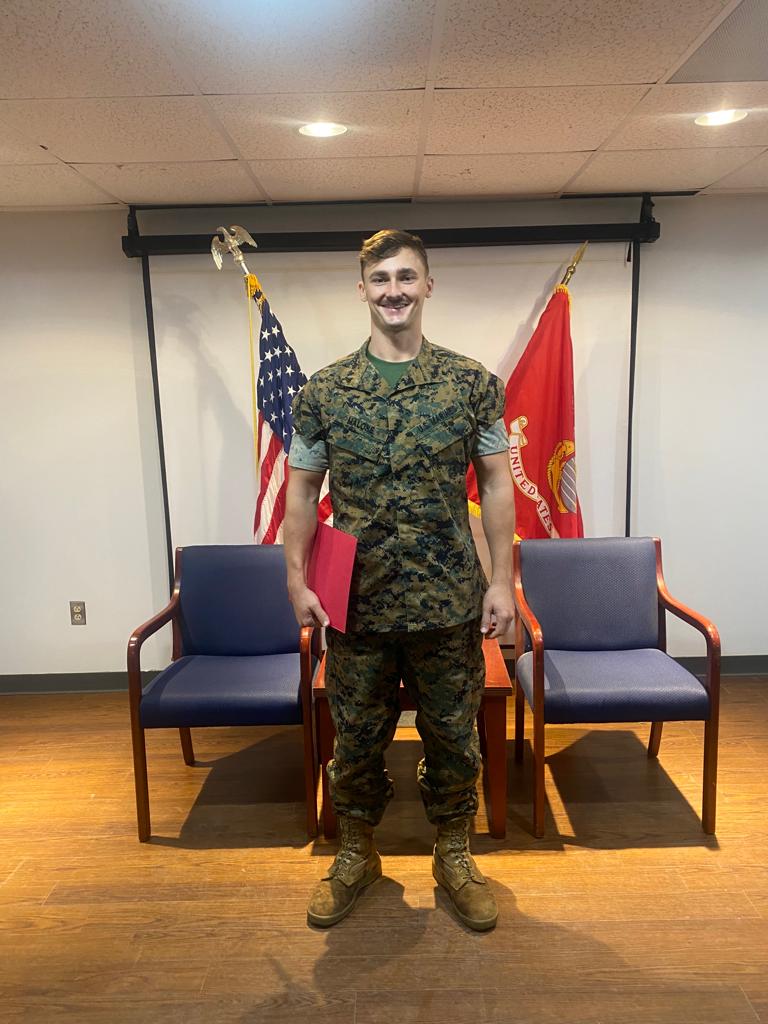
Four years in the Marine Corps, 4th Marines, 3rd Marine Division, as a Meritorious Corporal. I went from fixing refrigeration to managing maintenance for a whole fleet of utilities gear, and started coding in my off time.
- Craft Refrigeration tech HVAC/R, schematics, and troubleshooting that grew into generators, electrical, and water purification. Became a go-to across the section's utilities gear.
- Leadership 50+ generator fleet As Quality Control NCO, brought the AMMPS fleet (1.5–60kW) back under control from a broken program. Kept the fleet mission-ready and the maintenance program running clean.
- Field ops MWX power plan Designed the power plan and packing list for the Corps' largest field exercise, at 29 Palms. Powered major forward establishments in exercise.
- Field Kept power up Nursed a failing backup generator by hand for three days when no parts could reach the field. Comms and fire-support teams stayed online and our forward COC remained notionally alive.
- Recognition Soochow Creek Medal Awarded for keeping maintenance running through COVID, with meritorious promotions and a 292/300 PFT. Recognized at the regimental level for the work.
- Leadership
- Maintenance Management
- Power Generation
- HVAC/R
- Diesel Generators
- Electrical Systems
- Troubleshooting
- Logistics
Education
Colorado State University
B.S. Computer Science
Jan 2023 – Dec 2025
Graduated December 2025. Relevant coursework: Machine Learning · Reinforcement Learning · Distributed Systems (P2P and Cluster Computing) · AI Agents · Software Engineering · System Security · Game Design.
Skills
- Languages
- PythonTypeScriptJavaScriptJava
- Frontend
- ReactNext.js
- Backend
- Node.jsExpressNestJSFastAPIFlask
- Databases & ORM
- PostgreSQLPrismaMongoDBChromaDB
- Cloud & DevOps
- GCPAWSAzureCloud RunDockerGitHub ActionsCI/CD
- AI & Agents
- Agentic AIRAGMCPOpenAI APIOpenRouterStructured Outputmem0Reinforcement Learning
- Robotics & CV
- ROSROS2GazeboRVizYOLOUnityComputer Vision
- Integrations & Realtime
- PipedreamStripeVapiFirebaseWebSocketsCanvas APISelenium
- Data & Distributed Systems
- Distributed SystemsPeer-to-Peer SystemsSparkHDFSData Visualization
- Methodologies
- TDDAgileGit
- Soft Skills
- CommunicationLeadershipProblem-SolvingMentorship
Service Record
Technical Training
- Basic Refrigeration And Air Conditioning Technician's Course
- Advanced Engineer Equipment Electrical Systems Technician's Course
Military Awards
- National Defense Service MedalAwarded for active federal service in the armed forces between June 27, 1950 – July 1954; Jan. 1, 1961 – Aug. 14, 1974; and from Aug. 2, 1990 – Dec. 31, 2022.
- Marine Corps Good Conduct MedalAwarded to Marines after three consecutive years of honorable and faithful service.
- USMC Sea Service Deployment Ribbon (x3)Awarded to Marines who complete a deployment at sea or with an overseas unit.
- Global War on Terrorism Service MedalAwarded to military personnel who have served in support of operations related to the Global War on Terrorism.
Special Military Recognitions
- Meritorious Promotion to Noncommissioned Officer
- Soochow Creek MedalAwarded by the 4th Marine Regiment Commanding Officer, Colonel Tracy, for exemplary performance of duties at the height of the COVID-19 pandemic.
- Meritorious MastWon 1st place in company shooting competition, after which I competed against the Japanese Self-Defense Forces in a joint-service shooting competition.
Let's build
something.
Always open to discussing new projects and interesting challenges.
- Email tyler@contraptionsoft.com
- LinkedIn linkedin.com/in/tylermmalone
- GitHub github.com/19tylermalone94